Interoceanic Corridor in Mexico and Investments by Car Manufacturers (Updated: March 2026)
Mexico’s Interoceanic Corridor Is No Longer a Bet — But It Still Isn’t a Sure Thing
The CIIT has crossed from vision to viability. Here is what manufacturers need to know as the corridor enters its most consequential six months.
(Originally published August 14, 2023. Updated March 19, 2026)
March 2026 | Prince Manufacturing | Mexico Nearshoring Intelligence
When we first covered Mexico’s Interoceanic Corridor of the Isthmus of Tehuantepec (CIIT) in 2023, General Motors and Toyota had confirmed talks with the government and promptly announced nothing. The corridor was a compelling idea, chasing credibility it had not yet earned.
That has changed. As of March 2026, the CIIT is a functioning multimodal trade route — with proven automotive logistics performance, expanding industrial zones, and a June 2026 target for full operational status. For manufacturers evaluating Mexico as a manufacturing or logistics platform, it deserves a serious second look.
But “serious” is the operative word. The corridor has real momentum and real unresolved issues. This article covers both.
Where Things Stand: The Numbers That Matter
The corridor’s core infrastructure metrics have moved well beyond the original projections:
|
Metric |
Original Target |
March 2026 Reality |
|
Total Investment |
~$4 billion planned |
$7.5B rail corridor + $16B port upgrades |
|
Cargo Moved to Date |
Ramp-up phase |
889,920 tons and climbing |
|
Rail Lines |
1 line (Line Z) |
Lines Z & FA operational; Line K at 87.7% |
|
Development Hubs |
10 proposed industrial zones |
14 hubs — 9 concessioned, 3 in active bidding |
|
Port Coverage |
2 ports |
4 ports; upgrades targeting 1.4M TEU capacity |
|
Full Completion |
Target: H1 2026 |
June 2026 — confirmed on track |
The four CIIT ports — Coatzacoalcos, Salina Cruz, Dos Bocas, and Puerto Chiapas — now connect to 82 international destinations and collectively handle close to 20% of Mexico’s total cargo movement. That is a remarkable transformation for a region that, just a few years ago, had minimal freight infrastructure.
The Proof-of-Concept That Changed the Conversation
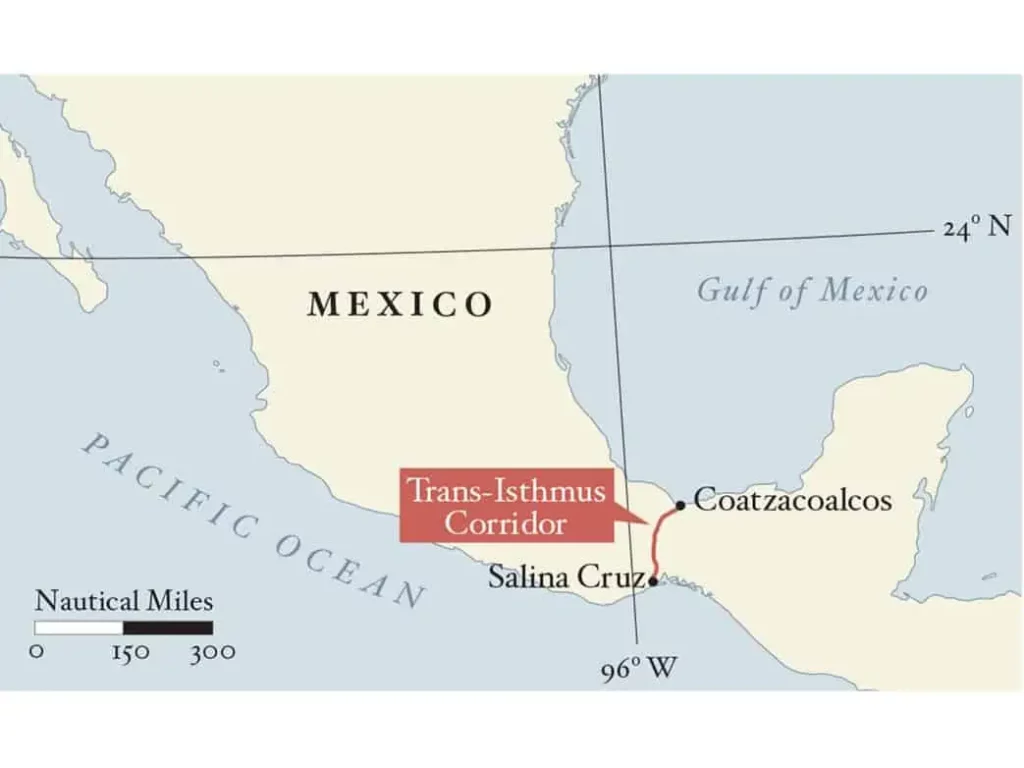
The most significant recent milestone for automotive manufacturers came when Hyundai Glovis completed the corridor’s first automotive logistics pilot — transporting 900 South Korea-origin vehicles from the Pacific port of Salina Cruz across 308 kilometers of rail to Coatzacoalcos on the Gulf coast, bound for U.S. East Coast ports.
The results were concrete: the corridor cut five days off the Panama Canal routing and reduced logistics costs by 15 percent. Sergio Gutierrez, President of Glovis America, put it plainly at the ALSC Mexico 2025 conference:
” So this interoceanic corridor will be a generational game changer for Glovis. It’s just like when the Panama Canal was created — many generations were not able to see the benefit, and nowadays we all use it.”
That framing matters. Glovis did not describe the pilot as a short-term P&L decision. They described it as a long-horizon infrastructure bet — which is exactly the lens manufacturers should bring to it.
What Is Being Built — and What Is Still Being Built
The corridor is not one thing. It is a layered platform of rail, ports, and industrial zones. Understanding what is complete versus in progress is essential before any logistics or site-selection decision.
Rail
- Line Z (Salina Cruz to Coatzacoalcos, 308 km): The main freight artery — operational.
- Line FA (Coatzacoalcos to Palenque): Fully operational for freight.
- Line K (Ciudad Ixtepec to the Guatemala border, 459 km): At 87.7% completion with a June 2026 deadline. The Ixtepec–Tonalá segment is at 99.4% and in active testing. This line opens Central American market integration.
Industrial Zones (PODEBI / Well-Being Development Hubs)
The original 10 planned zones have expanded to 14. Of these, 9 have been formally concessioned through international bidding — including Coatzacoalcos I and II (awarded for vehicle and auto parts distribution) and several agro-industrial and pharmaceutical hubs. Three more are in active bidding processes.
Sectors targeted across the zones include: automotive and auto parts, medical devices, pharmaceuticals, semiconductors, metals, agro-industrial, and clean energy. The geographic footprint spans Veracruz, Oaxaca, Tabasco, and Chiapas — covering more than 4.6 million residents across 105 municipalities.
Port Modernization
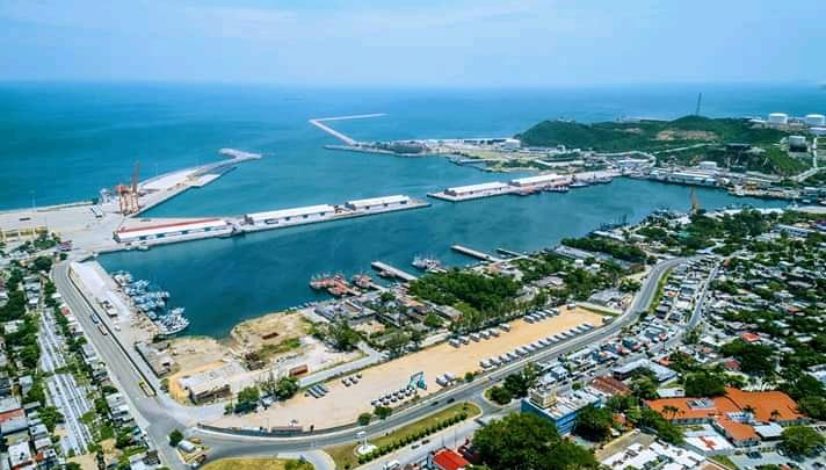
Major capacity investments at Salina Cruz and Coatzacoalcos are being finalized to accommodate the long-term container target of 1.4 million TEUs annually by 2033. For context: that would represent a meaningful slice of trans-oceanic cargo but is not designed to rival the Panama Canal’s roughly 8 million TEUs per year. The CIIT positions itself, accurately, as a complementary route and strategic relief valve — not a replacement.
The Tax Incentive Case
For companies willing to commit to southern Mexico, the fiscal benefits within the designated corridor zones remain substantial:
- 100% income tax exemption for the first three years of operation
- 50 to 90 percent income tax reduction for years four through six, scaled to employment levels
- VAT exemption on business operations within the corridor
- Immediate fixed asset deductions of 56 to 89 percent in the first six years
These incentives are structured for operators with a five-to-ten-year investment horizon. They are not designed to make year-one economics work for companies that need quick returns. But for manufacturers building long-term regional capacity in Mexico — particularly those facing tightening industrial park availability in the north — the numbers are meaningful.
Key Point: Southern Mexico’s abundant freshwater supply is an underappreciated structural advantage for semiconductor, pharmaceutical, and food and beverage manufacturers facing drought-related constraints at northern industrial sites.
What to Watch: The Next 120 Days
The second quarter of 2026 is arguably the most consequential period in the corridor’s development. Three milestones deserve close attention:
June 2026 — Line K Completion
President Claudia Sheinbaum and CIIT director Octavio Sánchez have both confirmed the June deadline for Line K’s full opening. Completion unlocks the Guatemala border connection and formally completes the corridor’s railway backbone. Watch for any delays on the Huixtla–Ciudad Hidalgo segment, currently at 84.4%.
July 1, 2026 — USMCA Joint Review
The first formal review of the U.S.-Mexico-Canada Agreement since 2020 convenes on July 1. The review’s outcome — whether the agreement is extended, renegotiated with tighter rules of origin, or placed on a path toward its 2036 sunset — will materially affect investment decisions for every manufacturer using Mexico as an export platform. The automotive sector is under particular scrutiny. This is not a reason to pause planning, but it is a reason to ensure your supply chain origin compliance is airtight before the review concludes.
PODEBI Zone Occupancy Rate
The pace at which the 14 industrial zones attract tenants will be the corridor’s most honest signal of private sector confidence. Early-stage concession activity in the automotive and auto parts zones at Coatzacoalcos is encouraging, but occupancy converts vision into a supply chain ecosystem. Track announcements from the three zones currently in international bidding.
An Honest Assessment: This Is Not a Simple Decision
We want to be direct: the corridor’s progress is real, and the infrastructure being built is not a political prop. Cargo is moving. Industrial zones are attracting capital. A proof-of-concept automotive shipment has been successfully completed.
But manufacturers should also know that questions remain. Rail safety protocols are still maturing on what is a relatively young operational system. Construction oversight and contractor accountability have drawn scrutiny from Mexico’s own federal auditors. Environmental and indigenous community concerns along the corridor route are active and, in some cases, have resulted in legal proceedings. These are not reasons to dismiss the corridor — they are reasons to conduct thorough due diligence rather than rely on promotional materials.
The corridor also has real capacity limitations at present. The volume it has handled to date is the beginning of a ramp — not proof of readiness for high-frequency, just-in-time automotive manufacturing logistics. Companies whose supply chains cannot tolerate a service interruption of 12 to 24 hours should plan accordingly.
Bottom Line: The CIIT is best suited for manufacturers with a longer investment timeline, Asia-to-East Coast routing needs, or operations where water availability and tax incentives outweigh the premium of established northern infrastructure. For JIT automotive production or high-frequency container shipping, the corridor is one to monitor — not commit to — in 2026.
Official Information and real-time tracking
For official information and real-time project tracking regarding the Interoceanic Corridor of the Isthmus of Tehuantepec (CIIT), the following authoritative sources are recommended:
-
Official website for the project: Mexico Projects Hub (Official Government Portal)
- International Trade Administration (ITA) – U.S. Department of Commerce Mexico New Rail Infrastructure Projects – Trade.gov
How Prince Manufacturing Can Help
Whether you are evaluating nearshoring or actively planning a move, Prince Manufacturing provides a low-risk path to establish and scale operations in North America. Through our IMMEX shelter program, contract manufacturing services, and integrated U.S. + Mexico capabilities, we help you reduce cost, accelerate timelines, and simplify execution.
Contact us for a consultation on your Mexico manufacturing strategy.
Mexico Manufacturing · Interoceanic Corridor · CIIT · Automotive Logistics · Nearshoring · Supply Chain · Plan México · USMCA 2026